Episode Transcript
[00:00:00] Speaker A: Where is AI creating meaningful value for real estate investors right now and where is it still mostly just hype?
[00:00:08] Speaker B: People are still expecting AI to be a magical solution where they will go in there and prompt it and say run my real estate business as the prompt. And they expect it to just take off and run their real estate business and then they're disappointed. You got to see this as your operations as a huge elephant and you got to eat this elephant one bite at a time. I can help you build your Iron man suit, I can give you some superpowers, but unfortunately I can also amplify what's crappy about you.
[00:00:43] Speaker A: Quick note before we continue. Nothing we discuss in this podcast should be considered legal, financial or investment advice. Tax lien laws vary significantly by state and every property situation and investor is unique. Always consult with qualified legal and financial professionals in your jurisdiction before making any investment decisions.
Now let's get back to the show.
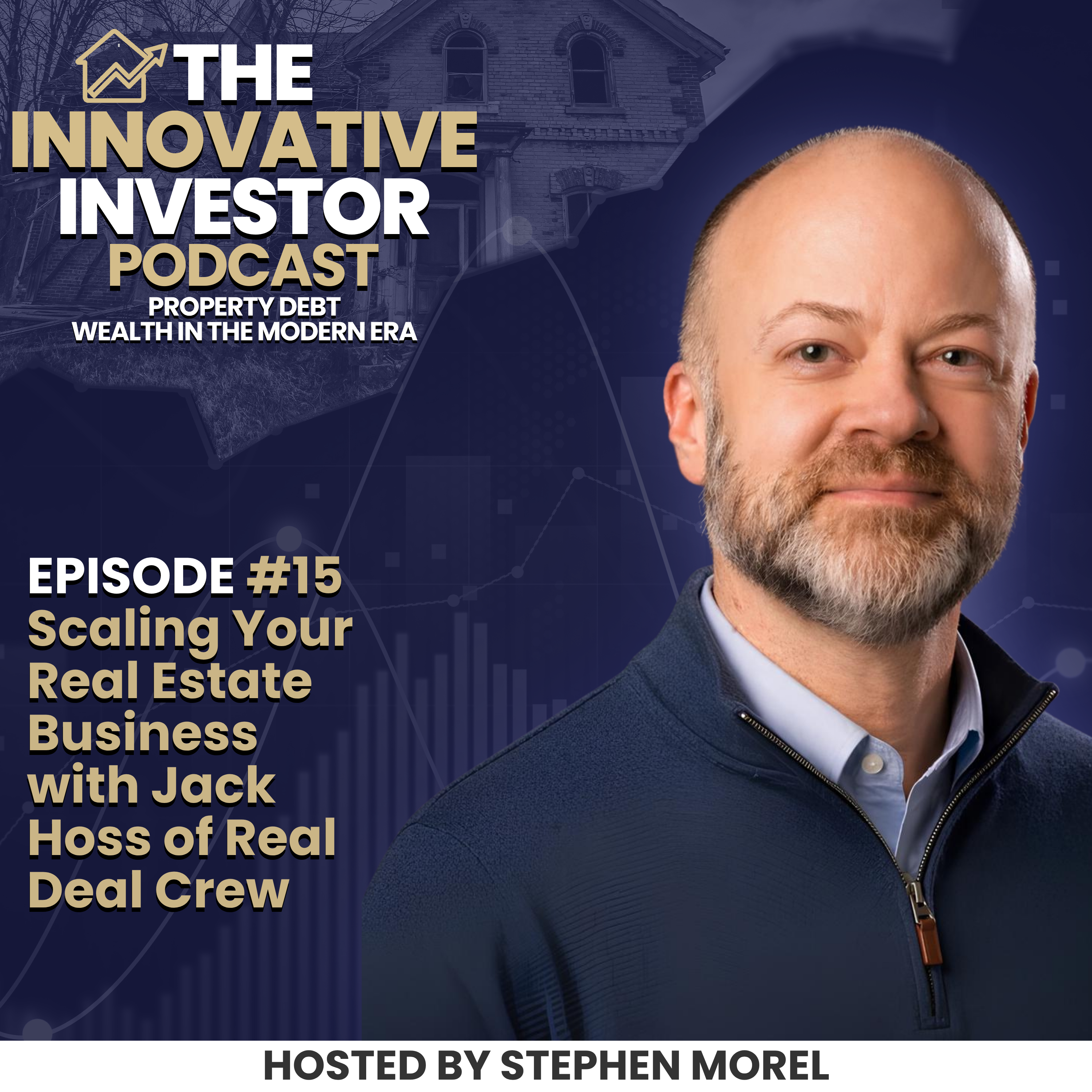
What separates the investors from consistently closed deals from those who are constantly chasing them? It usually isn't access to another hidden list, another CRM, or just another fly by night AI tool even. It's the operating system behind the business. Today we're talking with someone who has spent years studying real estate investors, building his own portfolio and solving operational problems that cause good leads and good opportunities to fall through the cracks. Welcome to the Innovative Investor Podcast where we explore how data, technology, legal insight and better systems are transforming the real estate real estate in the world of property debt. I'm your host Stephen Morrell, Founder and CEO of jurisdeed at Juristeed. Our mission is to democratize access to delinquent property tax investments and give investors the institutional grade data, title, intelligence and technology they need to invest like the professionals without having to actually be one. Today's guest brings an especially valuable perspective to that conversation. Jack Haas is a seasoned real estate investor, the founder of Real Deal Crew, and the host of Real Deal Chat, one of the longest running interview platforms focused on lessons from active real estate investors. Through his own investing experience and hundreds of conversations with operators, Jack has developed a firsthand understanding of what separates real estate businesses that scale from those that remain trapped in operational chaos. His work with Real Deal Crew focuses on issue on an issue every serious investor eventually encounters. Generating leads that's only the beginning. The real challenge is building the intake follow up technology and team systems necessary to convert opportunities into closed deals. Jack also brings a deep technology and automation background, making him a perfect guest for a conversation about where human judgment ends and where technology begins and how investors can Use both more effectively. Jack, welcome to the Innovative Investor Podcast.
[00:03:01] Speaker B: Well, I appreciate your time and wow, what a. What an intro.
[00:03:04] Speaker A: Before we get. We dive all into the fun, geeky stuff that we love, talking about people like you and I.
Systems, automation, scaling. I want to begin with your personal story.
Take us back, if you will, just for a minute. To the beginning. What did your life and career look like before real estate?
What was your. What first convinced you that investing could become more than just a side project?
[00:03:26] Speaker B: Well, this goes back to. I used to work at Microsoft and my one who. The person who became one of my business partners. At the time, we read Rich Dad, Poor dad roughly at the same time, and then we started.
Yeah, I think that's where a lot of things start. Right. And then he and I would spend our lunch hours just talking about real estate and planning our first moves. And then we. We then at about the same time, bought individually our first rental properties. And then, yeah, one thing led to another. And. And since then, and this was probably 10 years ago, if not more, I've been involved in hundreds of real estate transactions at this point where we've done fix and flipping rental properties and everything in between.
[00:04:20] Speaker A: I was just about to ask you, what if you remembered your first deal, and more importantly, like, what that first deal taught you that seminars and books just can't rely.
[00:04:30] Speaker B: Well, my first deal, actually, I bought a property in Indianapolis.
Um, and we probably won't go through the. The story too in depth, but in the end, it taught me that I should stick in my backyard is what I. What I learned the hard way. And then in the end, though, I. I still managed to come out kind of breaking even, if you will, on. On that deal, I found some creative ways or financing in which to. To exit those properties and kind of come out not terribly scathed, but it just took me a while to recoup much of that investment.
[00:05:14] Speaker A: Well, pain teaches lots of lessons.
Pain and loss teaches us lots of things, sometimes better than the successes do.
So. All right, next question is most successful investors have a moment when real estate stops becoming an idea and something becomes something much more real. It hits home and says, like, this is what I was meant to do.
Sometimes it can be a win, sometimes because something goes wrong. Kind of like we were just talking about learning things. But what was. What is that moment? What was that moment for you? Like, what. What's something that stands out as being that pinnacle moment where you're like, this is. This is my path?
[00:05:50] Speaker B: Well, I. I think it was kind of A mindset shift to, for the most part we, we buy a lot of distressed homes in our market and I am really repulsed by the concept of being predatory.
And when what, what actually clicked was that us helping a few of those people early on because they actually were in really dire straits and they didn't have any way to exit the property cleanly. And it, and it became one of those things that I realized how it important and what type of work we were actually doing. You know, there, there's been some really tough situations with that without our involvement. I, I, I think it could have gotten a lot worse. And having that mental shift that we were actually providing a service over everything else is probably the, the mindset shift that needed to happen.
[00:06:50] Speaker A: I love that, I love that we get, we encounter that not infrequently in the world of tax lien investing because it's, again, it's, you're talking about distress. Whether it's physical distress of the property or hard times, it's financial hard times that someone's going through. Why are these taxes delinquent? There's a thousand stories and reasons why, but they're usually tied to something that's, you know, it's troublesome and, but if you trace it back to a whole, it's a flywheel of putting turning bad into good. Right?
It, you know, a delinquent tax lien gives somebody more time to save their house rather than it being ripped out from under them. It's a loan they never had to apply for. They're immediately qualified and they get it. And it's 1% in like in Louisiana, 1% per month, you know. And I think the, the sometimes distressed real estate investing gets a bad rap just because it's not understood is to, hey, how does this impacting everyone else that has to live around that property? Right. How's this impacting that neighborhood? How about the values of that neighborhood? How about, you know, so there's all different ways to look at it. And you know, it's just, it's, it's really, it's great to get like the full perspective out there and dispel some of these unfair notions. I think that distressed real estate investing sometimes gets, I want to start segueing a little bit into technology, but we're going to ease into it because it's certainly the most exciting part for me and I know for you, but I think what's really interesting, and I'm looking forward to hearing your side of this, is how technology is starting to become.
I mean, it Really, I mean not starting to become is. But how it became and now is one in the same with what real estate investing. I mean you can't do it without it. You can't compete without it. You can't say that. It's like that's a nice to have, it's a need to have now. So getting to your story, you, you built a real estate portfolio while also developing a deep expertise in technology, strategic partnerships, business operations.
How did those two sides of your career begin to intersect? Where did you see them starting to become like really one path as opposed to two different things?
[00:09:12] Speaker B: Well, it, it actually happened, I think share a lot of stories with a lot of people too is that during the COVID years things got really tight to the point where I had to take a day job again. And in doing so now I had to find out a way in which to manage these properties, get some, still get some deals done while maintaining a full time job. So I had to find up, find ways in which to apply technology and solutions to fill in the gaps so that I wasn't spending another 40 hours a week doing the real estate aspects. So a lot of the stuff that I've done is just kind of born out of necessity and making sure some things weren't falling through the cracks.
[00:10:01] Speaker A: Yeah, well, it's, that makes a lot of sense and oftentimes as entrepreneurs, I know from myself you're looking for whatever way possible to make it work. Right? How can I make this successful and not fail or not, you know, go broke or whatever? Like, okay, that thing over there, that looks pretty good, right? Let me, let me try to learn that thing and make that, make this better.
You also have spent years hosting, as I mentioned before, Real Deal Chat, speaking with investors across wholesaling, flipping rentals, multifamily, other strategies. And I think that really gives you a really great perspective for individual investors, especially the listeners in our audience.
So let me ask you, what made you want to originally start Real Deal Chatting? What got you into thinking that that was something that had to happen for you?
[00:10:53] Speaker B: Well, I, I originally we started this, the podcast with, with one of my business partners and then we wanted to be around like minded individuals. We were kind of in a smaller community and we wanted the opportunity to chat with, share ideas, swap stories with, with other real estate investors throughout the country. One thing led to another and he kind of, I kind of adopted the, the show by myself. And again that kind of doubled down during the COVID years because you know, without any kind of interaction, the networking the marketing, the, the masterminds, they just kind of dried up during those times. And it was a way for me to keep my mindset in the right, in the right world.
[00:11:37] Speaker A: From your perspective, after having so many, because you've been in this way longer than we have, after interviewing so many, you know, operators and investors, what have you seen that, that, what qualities have you seen that are, that becomes like the common denominator that consistently separate people who are doing well, the people who are struggling well?
[00:11:55] Speaker B: So for first off, you're right, I have absolutely seen certain trends. One of them is, is that I typically end my show with some rapid fire questions. And one of them is, is, you know, if you could go back in time, if you could give your younger self one piece of advice, what would it be? I would wouldn't be surprised if 80% of the people on the show always say, I wish I would have started sooner. You know, that's, that's typically the response I get. But the other thing is that the persistence and consistency from guest to guest, like almost, I would say another 80% of the guests always have some sort of, they saw some sort of success and then they saw a crash of some kind and the fortitude to do it all over again and learn from it and press forward. Those are those people that have found that, that success and a lot of people will just kind of drop it after finding, hitting that first road bump. Right, right. It's those people that just pick up the pieces and continue forward.
[00:13:05] Speaker A: Yeah, I, that, that really resonates I, I'm sure with almost everybody listening because everybody goes through adversity, everybody goes through troubles and, and things don't work out like you hope they would. And you know, maybe you ran out of money, maybe you, you went through some family problems or your, or your, your customer fired you or whatever their thing that you built broke. And it's like, well, it's not what builds, you know, what really reveals like your character is, is what do you do next? How do you respond to that? Right. And I there again going back to my experience with the, with the accelerator program and in the very opening weekend, like there was like a three day thing where there was, everybody was together for, you know, 72 hours or something. And in one of these, one of the speakers was in there, done that 30 years and you know, all this kind of stuff, he was like, I'm going to pull a cliche on you and it's going to sound like you've heard it in the movies or whatever, but I'm going to tell you to look to your left and look to your right and know that 90% of you in this room are not going to make it.
As the odds are, it's a startup. Right. And the door is right over there. If anybody hates those odds. You think that stinks? Like, you know, like. I'm not saying that you're not invited. I'm just saying that if that dismays you. No, no shame. Right. Head on out. And of course, nobody left. But the point being that everyone, everyone stayed. And he looked at everybody and said, and the fact that you stayed in the face of those awful odds is the only reason why you have a chance.
Because it takes something of something that off the wall, something that most people don't have, something that against all odds, kind of a, kind of a mentality that makes an entrepreneur have a chance to be successful at it. If you, if you get turned away at the first sign of adversity, it's probably not meant for you, you know.
[00:14:51] Speaker B: Right.
[00:14:52] Speaker A: I think that's, that's just a great way to look at it.
So now let me flip the tables a little bit on the, on your experiences that you've gotten from your guests. What's the most, what are the most common mistakes you hear people are making that, that, you know that, that or have had in their careers or have experienced? Like everybody, this happens or, or this is what really gets to most people. What, what has been that, that some of those most common things you've seen that everybody trickets tripped up on?
[00:15:20] Speaker B: Well, I would probably say a couple, One of them is that falling in love with a deal or just getting the deal for the sake of a deal instead of like sticking to your buy box, sticking to your numbers. You know, I think people, maybe it's the entrepreneurial spirit, we kind of fall into the trap of wanting that next dopamine hit and instead of being a bit more selective and, and, and the like.
The other thing too though, is, is, and this is probably a little closer, more closer to home because I go to real estate meetups and a few other things.
People have a tendency of treating real estate as a side hustle instead of a business or like a hobby, and then they end up treating it like another job. You know, they put in all this time, money, money and effort, and then you realize that they barely made minimum wage or they, they don't plan it accordingly because, you know, everybody's chasing this concept of passive income. In the end, they never take a minute to step outside and Work on the business, getting the processes, systems in place in order to eventually remove themselves and run it like a business.
Does that make sense?
[00:16:44] Speaker A: Yeah, it does. And, and not only does it make sense, we're going through that right now with our business. And, and it's, it's hard, right? It's, it's because working on the business, it is no doubt the best thing for an owner, an entrepreneur or founder to do. Sometimes that's not what pays tomorrow's bills, you know, and so the temptation is that I'm going to make a few bucks here, let me go get me, go do that thing, right? And yet if you had had built the system first, you would have been able to repeat that revenue creating event 10 times over. Right? Rather than just cashing out on that one. And now you're left with, you spent that money and now you still don't have a system, you know, and so it's, you know, we're, we're almost like slow, like slowing down, but just stop pausing to say like how do we, how do we grow, how do we get to, how do we grow our business to the point where we can start scaling something that's working and you can't, if you're just chasing the dollar, you can't, you never get there.
So I like, I like that as well. I know you've harped on, you know, practical, practical execution over theory. Right? Over analyzing everything that does.
Why do you think intelligent, well funded people still get trapped in analysis instead of taking action? What is your take on that from this might be kind of a psychology kind of question, but what's your, what's your, what's your position on that?
[00:18:04] Speaker B: Well, I, I, in the end, I think it all comes back to fear. You know, people, people don't want to fail. They don't like the concept of actually being hurt in that way. In fact, we will have a tendency, you know, if we want to go down the psychology of it, we will have a tendency of doing everything we can as a human to avoid pain over working towards any sort of concept of pleasure. And you know, it's, it's just a, it's just the, the concept, the, the only thing that I have seen that overrides that fear is really taking a moment and establishing your why, understanding why you're going to be doing this. And I don't mean like the surface level why, I mean get into it and understand why this is important, why you're going to do this, whether it's anything from supporting your family. To, to retirement. You know, it's. And having a true heartfelt belief behind it is the only thing that can override it sometimes.
[00:19:06] Speaker A: Yeah, that's been. When you said fear, that, that was powerful. All right, enough of the psychology stuff.
Let's get into the fun tech stuff. AI. AI, AI. Come on.
You know it's the loudest conversation in the room, right? It's the largest conversation in real estate these days. Investors are being promised automated this and automated that. Instant underwriting, you know, risk removed and AI generated. Okay. Your background allows you to evaluate those claims as both a technologist and an investor. So first question here. Where is AI creating meaningful value for real estate investors right now? And where is it still mostly just hype?
[00:19:52] Speaker B: Wow, that's a big question.
So where there's some meaningful value is. I would even, I would go start at the, at the beginning of what we were just talking about. And it's really foundational.
We are in a day and age where we have the ability to do some of those things that we might be putting on the back burner. And that could be anything from helping you develop standard operating procedures to basic virtual assistance type stuff. Where I think things are overhyped right now is that we are kind of being promised a lot and things will quick.
I'm sure people listening to your show find that it goes completely off the rails, whether it's hallucinating or a few other things. And what I've seen is that people are still expecting AI to be a magical solution where they will go in there and prompt it and say run my real estate business as the prompt and they expect it to just take off and, and run their real estate business and then they're disappointed because it can't. Right. You got to see this as your operations as, as a huge elephant and you got to eat this elephant one bite at a time.
I've found the most success when implementing any AI type solution is finding that low hanging fruit and implementing things in stages and one bite at a time and making sure that it doesn't go off the rails. And it does that singular task well and repeatedly so that then you can either expand it or move on to something else.
So where I'm seeing this right now is typically like early in the process, right.
What I've seen is everything, you know, I've helped people optimize their real estate, their local, their websites, I mean optimize their lead intake and process and automation for lead scoring and data in ingestion and a few other things.
Some of These things are becoming easier and easier to implement. I don't know if you're familiar with DealMachine for example, but DealMachine recently announced an API we can tie into some of that. So we can, we can actually score, start scoring opportunities and help investors start to focus on, on deals that are actually going to produce something instead of wasting cycles or was or that type of thing. It's really allowing us to score these opportunities on the early end, focus on those things that actually could produce something and then in the end find some noticeable results in the business itself. And then on the flip side, I've been implementing some things for property management as well. So that's really kind of helped a lot of time sucking activities.
[00:23:00] Speaker A: And are these, these things that you're building yourself or that you're purchasing as built and just employing them in your business?
[00:23:09] Speaker B: Well, I, I would say it's, it's a combination of all of the above.
So I'm still leveraging some things that are off the shelf, you know, because of the integration points. And we have to keep in mind that whatever we build, we also have to maintain.
And you're dealing with real estate companies and businesses that are always changing environments that are always changing. And now you have a moving target that we call AI that is up being updated on a staggering pace right now. So whatever you develop and create, you have to be ready to maintain and, or hire somebody or employee, somebody like me who can stay on top of it because that becomes a full time job in itself.
[00:23:58] Speaker A: Yeah, a big topic like right now that's not brand new, but it's been really taking, taking front page in a lot of, you know, AI circles is the term AI slop. And it's so easy to get something created. And the problem is that something doesn't mean it's a good thing. Right? It just means you've created something.
And typically without enough thought or without enough involvement of the human who knows what they're doing, you end up with the AI is going to create the thing. It just may not be the thing that you were hoping it would be. It's good. Something will get created. If you put one word or ten words or whatever into a prompt, it's going to do something, right? It's going to fill in all the blanks where it didn't have the right context, et cetera.
So where have you seen that challenge or that consequence of showing up in your circles in real estate investing where AI is being utilized, overutilized or maybe improperly utilized? And what's coming out to the side is more harm than good.
[00:25:08] Speaker B: Well, I don't know about you Stephen, but I definitely have noticed that not only are you talking about that AI slot, but there is a big part of the population right now who is repulsed by it.
Like if, if you go to your Facebook page, then AI Slop, you can actually see when a new model hits because all of the AI slop all has the same look and feel. Right now when we're recording this, one of the big ones that I've seen on my feed is that everybody has those marker looking posters like everybody. It all has the same font, it all has the same colors, it all has the same look, kind and feel and you can tell instantly that this is it' it's AI generated and it gives people the impression that you've put no thought in it other than a simple prompt. This is where I'm going to help everybody here now. So let's, let's, let's combat this AI slop for a second if we, if you don't mind.
[00:26:08] Speaker A: Yeah.
[00:26:08] Speaker B: Go into your AI version of Choice and let's start a new chat right now and, and ask it to help build out your brand guidelines. And you can upload your current logo, maybe you connect it to your current website so it understands your tone, what you're offering and a few other things. But have it and then tell it to ask you questions in order to build out your brand guidelines. And it's going to walk you through the process, answer all of the questions honestly and give it as much detail as possible.
And what you're going to end up with is a markdown file, a PDF, something that establishes your brand gotten brand guidelines. And then you'll attach that to a project or what have you and you have AI use that as a reference going forward. And now it's leveraging your brand guidelines, your colors, your fonts, your details. And now it doesn't look as AI Slop as your competitor.
[00:27:09] Speaker A: Right.
[00:27:10] Speaker B: So just take a moment to do
[00:27:12] Speaker A: that type of thing that really is very relevant to what I mean, something I'm going through right now. Because I, I, I, I've been the big proponent of AI in our company and I'm, you know, and, and I'm getting buy in and everything. But it's not been the easiest, as easy as you may have thought it would be because you think, well this is just going to make your job easier so you should all like it.
And what I encountered was in intra office communications like so we use slack is our, is our communication hub.
And now of course, your LLMs and your, you know, your big AI models are all, are all integrated. And so a message gets sent through Slack, but it came through the AI. Now you were doing something substantive that created the message. And then the AI turns it into a certain format and sends it over to this person that is your colleague as a, as you, as your message. Right. And it's so obvious that it's not you that wrote it. It's so obvious that an AI wrote this. I, you don't, I don't talk like that, right? I don't, I don't say these, these, this jargon. And when I'm talking to you, like we're talking right now, we're just chit chatting. There's no script, there's no, you know, like we're just, we're just talking. But if this were AI talking on for me, it would even sound like me.
I, and I've since created a voice guide and I mean that's been hugely helpful. And I have taken the time to say, no, I do not ever say that. Like, this is what I sound like. Right? And then, you know, so it's been learning what I also was like feeling the resistance though, from the team, that was really powerful.
And because at the end of the day, like, it's not about me versus them, like, hey, deal with my AI version of me.
Like it or not, it's like, you know, this is a real human element to this, that where they're building, it's a resistance to saying, I want something authentic. I want you. I don't want AI as your, as your agent. I want you. Right. And so I'm feeling that there's an opportunity there for those who understand this lesson to tap into that innate human desire to be connected to other humans.
And I think AI can help us be more effective with that and to deliver more that we could never possibly do by ourselves but still remain human. And I think that's going to be the trick moving forward because we're never going to change. Humans are still going to want freedom, we're going to want independence, we're going to want uniqueness. The things that computers take can take away from you. Like as you mentioned, the AI slob, right. It looks like everybody else. It's not unique, it's not you. And that's part of the problem.
[00:30:08] Speaker B: Yeah, I can't agree more. And in fact, you know, you gave a great example of what you did in order to combat AI slop. You know, and sometimes it can be as. And I know some people might be a little leery of this, but when you connect your AI to your email, there is a ton of information that the AI could use to help you build that voice that you might struggle with on your own. It goes through years of email content. It can pick up your voice pretty quickly if you let it.
And again, you're taking a step that 99% of the people in the population aren't doing right now.
And it's a great way to stand out.
[00:30:56] Speaker A: Do you think that. How much do you think that AI is going to help level the playing field in real estate investing where maybe people who had. There were other reasons why certain segments of the investment world had a leg up, right? They were deep pockets or they were well connected, whatever, what have you. How much do you think AI is allowing currently, allowing the others who are, who do not have those advantages before AI to have a better shot at competing and being successful like the ones who were before AI?
[00:31:30] Speaker B: Well, I think the, the biggest leveling of the playing field is going to be around education when it comes to this type of stuff where, you know, you can have AI consume reams of books and, and you can now chat directly with that, that author, you know, or, or what have you. And in fact, I've seen guru real estate gurus kind of close up shop or move on because the information now is just so easily available that it's kind of collapsed some of that market. You know, it's, it's, it's just that, that piece of it. Oh. Whereas I was thinking like, regarding the rest of it operationally, you know, where underwriting is a big deal that can kind of lower the bar there, you know, I have an AI agent that underwrites real estate now, you know, and it picks up things.
[00:32:25] Speaker A: You.
[00:32:25] Speaker B: We have a buy box, buy box established and details that we like it to generate and to keep an eye on. It allows us to pull way more information together and provide far deeper analysis of a property in far less time than we ever could on our, on our own. Operationally though, yeah, we can speed things up, make things a little more seamless and easier. But unless this is, this is where things kind of start to fall apart for some people. And I'll be the first one to say that I can help you build your iron man suit, I can give you some superpowers, I can amplify what's great about you, but unfortunately I can also amplify what's crappy about you and if you don't have certain things together or if you're not strong in a certain area, don't expect AI to just simply fix it. In fact, it could actually make things worse if we don't put in the proper foundation or if you don't have the right resources.
[00:33:26] Speaker A: Yeah, that's, that's great.
It's, it's moving so fast, we have to keep up with it. Right?
[00:33:32] Speaker B: Yeah.
[00:33:34] Speaker A: I want to pivot technology for a second because if I don't now, we'll never get off of this topic. I could talk about this for hours, really, but most of our listeners are in the distressed property debt sector. That's particularly tax liens. But you know, tax liens, deeds and the properties that, that come out of those. It's one of the reasons why this conversation with you is so relevant to, to them and to our audience is that tax delinquency is both a form of property debt as well as a sign of distress.
But a delinquent tax record is not automatically a good lead or a good deal just because it's delinquent. Right. It's certainly not automatically a good deal. So from a deal sourcing perspective, and I love that you were just talking about your buy box, right? Your AI, it's helping you underwrite deals.
AI or not, from a deal sourcing perspective, how do you view or have you, do you have an opinion on tax delinquent property data and, or that factor in respect to an opportunity in your world?
[00:34:42] Speaker B: Well, I, I guess we could possibly have kind of a correlation here regarding the, the properties that we underwrite and we look at because they're distressed homes that are, you know, and they could be distressed in a variety of ways, from physical to tax obligations or pre foreclosure or what have you. There are some things that we can pull and again this goes back to having access to a lot of data we can now like.
I keep bringing up DealMachine, but I'm going to use Deal Machine as an example.
We have a situation now that we can actually take information and let's say you have your public records of tax tax issues. I can now pull additional information regarding the neighborhood, previous permits, regarding property repair, details on ordinance or town or city violations.
Having access to all of these additional data points allows me then to score that opportunity for more of a likelihood of it being a good deal or a more motivated situation.
So it lets me retarget my efforts on those things that are likely going to be more profitable. Does that make sense?
[00:36:13] Speaker A: Yeah, it totally Does I like the something you were. You were just saying? Kind of made me think about going way back in earlier. My career before jurisdeed was we were working for local government in dealing with their. The tax delinquent properties that investors didn't buy, the tax lien that nobody bought it. Right. So just sat as a delinquency on the, on the tax collector's books and eventually they left with this eyesore of a property with grass up to here and 10 years of unpaid taxes. And like what do we do with this?
And the. We were studying the correlation between tax delinquency and blight and it was almost a one to one ratio. And so I love the fact that like data can tell stories. Right? Data can tell you that, hey, because of that, not always the same story, but like it can, if you study it, this means. Could mean that. Right. And that could help lead you down that path. So yeah, look, data is powerful. I'd love to hear your quick take on the difference between or like where the truly the advantages and having it with data is in having access to it or knowing what to do with it once you have access to it.
[00:37:27] Speaker B: Well, so this is where I think we're gonna. We do see a huge leveling of the playing field. Right. Like a lot of the stuff that I'm talking about, layering data and, and other things, this was only available to the big players. You know, we're talking about blackrock type stuff. But now it's like available to us local investors and we can analyze these. This data in. In all kinds of ways. But I do have like a direct story like that. Like recently we had a situation where an investor locally was liquidating their portfolio and we were focused on a couple properties within the portfolio and we couldn't get the numbers to work. But for some reason I had fed all of the properties into the system and I just said, hey, based on what you know about all of these properties, are we looking at the wrong thing? Like maybe there's something in this package of portfolio properties that are like something that we should consider that we're not. And it, it flagged two other properties that we weren't even considering saying, yeah, these are actually the diamonds in. In the rough year. These are the, these are the two properties that you ought to be reviewing and looking at. And then when we ended up not buying them, but gave us again that perspective of because it. It pulled information automatically from the city and, and, and the rent roll and the, and the P L, it put parsed all of this information for us and it surfaced opportunities that we would have and frankly we, we were ignoring and it, it was kind of like even, even after working with it as long as I, I have really, really telling as to what, what is capable of, of happening here.
[00:39:27] Speaker A: Yeah, that's, I think a lot of people are, are struggling with and that's, I'd love to hear your, your, your maybe your advice for our listeners.
You know, which, which might be the same advice for any real estate investor that's trying to figure out like what do I do? What do I. There's so many options out there for technology. Right. There's all these different cool shonda, they all sound great and a lot of them do the same thing or try to do the same thing.
How do you cut through all the noise and how do you figure out like what you really should try to use to, to make yourself have more, allow yourself to have more success with your real estate investing endeavors?
I guess it depends upon what's, what stage of the journey you're at. Right? Someone who's just getting started might need different tools than someone who's been doing it for 10 years. But at a high level though, like how does somebody, what's your advice for someone who's, who's, you know.
I love what I'm hearing, Jack. I love what, everything you're saying, Steven, what you say, where do I go? What should I be using to help my real estate investing career?
[00:40:27] Speaker B: Well, I'm always going to tell people to start with one platform and pay for it. You'd be surprised at the results, the difference in results you're going to get with simply a $20 a month plan versus the free account.
I'm, I'm still surprised how many people are on the free account and they're just perfectly content with that.
You're just getting better. LLMs, large language models as well as extended extension of the memory and the details it can remember regarding what you're working on and what have you. I wouldn't be distracted by the latest and greatest because they're, they're hopscotching themselves all the time. Right. Like Anthropic is in the lead, then ChatGPT is in the lead. You're going back and forth to keep up with that.
You're just kind of wasting your time. Just pick one and just keep going with it for the time being.
[00:41:22] Speaker A: Right? Right.
[00:41:23] Speaker B: That being said again, a $20 subscription on Chat GPT and a $20 subscription on Anthropic, we're talking about $40 a month.
I dare say that there isn't a cheaper tools set that you could come across a better return on investment right now when it comes to like are we really going to quibble over 40 bucks a month? I mean if you're right, it's, it's, it's almost silly what you're capable of doing for 20 bucks on both platforms. I'm going to say right now that chat GPT is going to be better at image generation and that those, some of those day to day operations like if you want to tie it to your email and the like, that might be a better solution on that side. Claude might be better for text generation and, and certain design elements and, but in the end, like I said, $40 a month, you just can't beat it right now.
[00:42:24] Speaker A: That's a good point. Yeah, we're nearing the end of our time but, and I don't normally do this but because how you like to end your shows, I wanted to pay a little homage to your end of podcast and style with a little quick fire round of our own.
Right back at you. So let's get ready for the lightning round and I'm just going to top of mind. First thing that comes to your head.
What's the most underrated real estate Lead source.
[00:42:58] Speaker B: If you still have a phone book that's being pushed out in your area,
[00:43:02] Speaker A: that, that's a great one.
What's the most overrated real estate technology?
[00:43:08] Speaker B: I'm going to say Google Ads.
[00:43:11] Speaker A: One metric every acquisitions team should be tracking.
[00:43:15] Speaker B: Lead source.
[00:43:17] Speaker A: One task an investor should automate right now.
[00:43:21] Speaker B: Follow up.
[00:43:22] Speaker A: One task an investor should never completely automate.
[00:43:27] Speaker B: Well seller conversations.
[00:43:29] Speaker A: Love that.
The best lesson you've ever learned from a podcast guest.
[00:43:35] Speaker B: Don't give up.
[00:43:36] Speaker A: And just a couple more one book, tool or resource that has had an outsized effect on your career.
[00:43:43] Speaker B: The Alex Hormozi series.
[00:43:45] Speaker A: Like Alex, it's nothing but nothing but quality stuff for men.
And if you had to rebuild your real estate business from zero ground zero tomorrow, what would you do first?
[00:43:55] Speaker B: Establish my local network.
[00:43:57] Speaker A: Great answers, ma'. Am. All right Jack, we close on our, on our going back to our normal ending style. We close every guest conversation with with something we call the deed line. Because the deed represents more than just ownership. It's a combination of decision making, commitment and something meaningful that is passed forward.
So here is your deedline. If you could pass one lesson from your career to the next generation of real estate investors and know that they would carry it with them, what would
[00:44:27] Speaker B: that lesson be start early, but be ready to pivot.
[00:44:31] Speaker A: That's about as powerful of a place to leave it as I can imagine. I did. That hits home on so many different levels. You can't. You have no idea.
And I know so many people that can mean different things. So I think that's a great place to park it right now.
Jack, thank you for being so generous with your experience and for giving us an honest look at your experience as a podcaster, as an investor, as an entrepreneur, as a technology enthusiast, and really a behind the scenes look at what it takes to have a successful real estate operation. Before we close, where should our listeners go to follow your work, to listen to the Real Deal Chat or learn more about the Real Deal crew?
[00:45:11] Speaker B: Well, everything is consolidated at one location@real dealcrew.com Perfect.
[00:45:16] Speaker A: That's easy.
Well, with that, Jack, thank you again for joining us on the Innovative Investor Podcast. And to everyone listening, remember this finding an opportunity is only the beginning. And whether you're sourcing distressed properties, purchasing tax liens, or building a broader real estate portfolio, long term success comes from combining good data with disciplined diligence, responsible execution and repeatable systems. That's the work we're doing across the jurisd ecosystem and through our our Law Practice Tax Deed Law Group, we provide legal guidance for tax, sale and distressed property matters. And through deedwolf, we help investors manage the operational work regarding distressed assets and disposing of them. Through Juristeed, we're building the data title intelligence and technology platform designed to make delinquent property tax investing more accessible, transparent and scalable for everyone. To learn more, visit jurisd.com and if you received value from today's conversation, please subscribe, like and pass along to someone else who might find value to the Innovative Investor Podcast and to the Real Deal Chat. Wherever you listen, share this episode with someone who's serious about building a smarter real estate business. I'm Stephen Morell. This is the Innovative Investor Podcast. Until next time, invest smart, invest safe.